Email Us:



You’ve completed your Vietnam eVisa application, double-checked every detail, and are just one click away from finishing the process. Then, instead of a payment confirmation, a message appears saying “Payment Unsuccessful.” Naturally, questions start racing through your mind. Was your payment actually processed? Has your application been submitted? Should you try paying again, or could that result in being charged twice? If your departure date is approaching, the uncertainty can quickly become stressful. Fortunately, a failed payment doesn’t always mean your application has failed. In many cases, the issue is temporary or easy to resolve once you understand what caused it. This guide explains the most common reasons why Vietnam eVisa payments fail, how to troubleshoot the problem safely, and what steps you should take to complete your application without unnecessary delays.
Reaching the payment stage is often the final step of the Vietnam eVisa application process, but it is also where many applicants unexpectedly encounter problems. While most people assume the issue is caused by the Vietnam eVisa system itself, payment failures can actually originate from several different sources, including your bank, payment card, browser, internet connection, or temporary payment gateway interruptions.
Every online payment goes through multiple verification steps before it is approved. Your bank first checks whether your card is authorized for international online transactions and whether sufficient funds are available. The payment gateway then encrypts and processes the transaction before sending a response back to the Vietnam eVisa application system. If any part of this chain experiences a disruption—even for a few seconds—the transaction may fail, resulting in a “Payment Unsuccessful” message.
In some situations, the payment is declined before any money leaves your account. In others, your bank may temporarily place the amount on hold while waiting for confirmation from the merchant. This explains why some travelers notice a pending transaction on their bank statement even though the Vietnam eVisa website reports that the payment was unsuccessful. Although this situation can be worrying, it does not necessarily mean you have been charged permanently or that your application has been submitted successfully.
Technical issues are another common factor. Using an outdated browser, unstable internet connection, browser extensions that block payment scripts, or refreshing the payment page before the transaction is completed can interrupt the payment process. During periods of heavy website traffic or scheduled system maintenance, payment requests may also time out before they can be processed.
Timing can make a difference as well. Travelers who wait until the last few days before departure often feel pressured to complete the application quickly. In that rush, they may click the payment button multiple times, refresh the page repeatedly, or submit another application before confirming whether the first payment actually went through. These actions can create duplicate applications or multiple pending transactions, making the situation even more confusing.
The encouraging news is that most Vietnam eVisa payment problems can be resolved without starting the entire application from scratch. The key is to identify what caused the payment to fail before taking any further action. In the following section, we’ll examine the 12 most common reasons your Vietnam eVisa payment was unsuccessful, explain why each issue occurs, and provide practical solutions to help you complete your payment safely and efficiently.
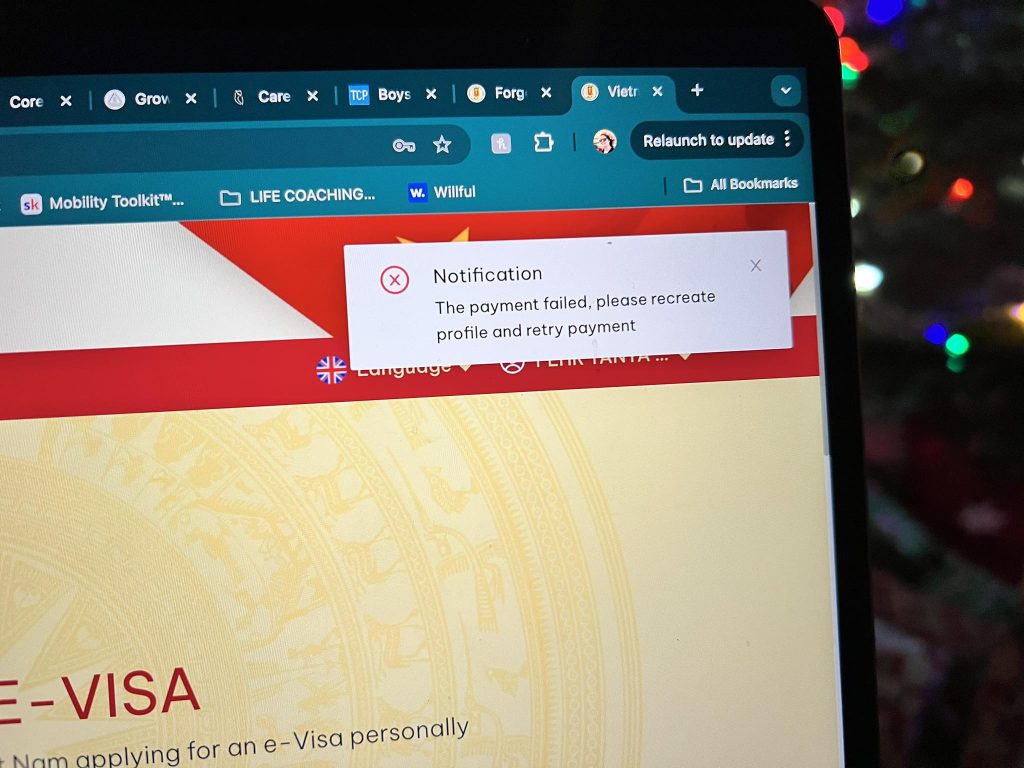
Payment failures can happen for many different reasons, and not every failed transaction requires the same solution. Understanding the exact cause can help you avoid unnecessary delays, duplicate payments, or repeated application submissions.
One of the most common reasons for a failed Vietnam eVisa payment is that the payment card isn’t enabled for international online transactions. Some debit and credit cards have overseas payments disabled by default as a security measure, while others require activation through your banking app before they can be used on international websites.
How to fix it: Contact your bank or check your online banking settings to confirm that international e-commerce payments are enabled. If necessary, use another Visa, Mastercard, or supported payment card.
Even if your account appears to have enough money, temporary holds, currency conversion fees, or bank service charges may reduce your available balance below the required payment amount.
How to fix it: Verify your available balance rather than your current balance. Allow additional funds to cover exchange rate fluctuations and possible bank fees before trying again.
Banks continuously monitor unusual spending activity to prevent fraud. An international payment to a foreign government payment gateway may trigger a security alert, especially if you rarely make overseas online purchases.
How to fix it: Contact your bank immediately and ask whether the transaction was declined for security reasons. Once the restriction has been removed, you can attempt the payment again.
Sometimes the payment gateway cannot complete the transaction within the required time because of temporary server congestion or slow communication between systems.
How to fix it: Wait several minutes before trying again. Avoid refreshing the payment page repeatedly, as this could interrupt the payment process or create duplicate attempts.
A weak or interrupted internet connection can break communication between your browser and the payment gateway during the transaction. As a result, the payment request may not be completed successfully.
How to fix it: Switch to a stable Wi-Fi network or a reliable mobile data connection before making another payment attempt.
Certain browsers, outdated software versions, or browser extensions may interfere with secure payment pages. Cached data or disabled cookies can also prevent payment requests from being processed correctly.
How to fix it: Clear your browser cache and cookies, disable unnecessary extensions, or switch to another modern browser such as Google Chrome, Microsoft Edge, Safari, or Firefox.
Simple typing mistakes such as an incorrect card number, expiration date, CVV security code, or cardholder name can cause the payment to be declined immediately.
How to fix it: Carefully review all payment information before submitting the transaction. Enter the details exactly as they appear on your payment card.
Many banks set daily spending limits or limits specifically for online purchases. Even if your account has sufficient funds, exceeding these limits can cause the payment to fail.
How to fix it: Check your daily transaction limit with your bank. If necessary, request a temporary increase before making another payment.
Like any online platform, the Vietnam eVisa payment system may occasionally experience maintenance, software updates, or temporary technical disruptions that affect payment processing.
How to fix it: Wait for a short period before trying again. If the issue persists for an extended time, monitor official updates or seek professional assistance rather than repeatedly submitting new payment requests.
Closing the browser, navigating away from the payment page, pressing the back button, or refreshing the page before the transaction finishes may interrupt the payment process.
How to fix it: Once the payment has started, wait until the system displays a final confirmation or failure message. Avoid interacting with the browser until the process is complete.
Some banks automatically reject transactions involving foreign currencies or payments processed through overseas payment gateways due to regional security policies.
How to fix it: Contact your bank to confirm whether international currency transactions are permitted. If necessary, use another payment method that supports international purchases.
After receiving a payment error, many applicants immediately try again several times. Multiple payment attempts within a short period can trigger automated fraud protection systems, resulting in additional payment rejections.
How to fix it: Before attempting another payment, first determine whether the previous transaction is still pending or has already been processed. Waiting a few minutes and confirming the payment status can help you avoid duplicate charges and unnecessary complications.
Seeing the message “Payment Unsuccessful” doesn’t always mean the transaction has completely failed. In some cases, the payment may still be processing, while in others, your bank may have temporarily authorized the transaction without the Vietnam eVisa system receiving final confirmation. Before attempting another payment, it’s important to verify what actually happened.
The first step is to check your bank account or credit card statement. If no amount has been deducted and there is no pending transaction, the payment most likely did not go through. However, if you notice a pending authorization or temporary hold, avoid making another payment immediately. Banks often place a temporary hold on funds while waiting for confirmation from the merchant. If the transaction is ultimately declined, the held amount is usually released automatically according to your bank’s policies.
Next, check your email inbox, including your spam or junk folder. If the payment was successfully completed, you may receive a payment confirmation, an application reference number, or other notification related to your Vietnam eVisa application. Keep these emails, as they may be needed if you contact customer support later.
If you already have an application reference number, use it to check your application status rather than assuming the payment failed. A payment error displayed on your screen may not always reflect the final transaction result. Verifying your application status first can help prevent duplicate applications and unnecessary payments.
One of the most stressful situations is discovering that money has been deducted from your account while the website still displays “Payment Unsuccessful.” Fortunately, this does not always mean your payment has been permanently charged or that your application has been lost.
In many cases, what you see is a temporary authorization rather than a completed transaction. Your bank reserves the payment amount while waiting for confirmation from the payment gateway. If the gateway never confirms the transaction because of a timeout or technical interruption, the authorization normally expires automatically, and the funds become available again after a certain period determined by your bank.
For this reason, you should avoid making another payment immediately after seeing a deduction. Instead, wait for a reasonable period while checking your email, application status, and bank transaction history. Acting too quickly may result in two successful payments if the first transaction is eventually confirmed.
If the transaction remains pending for an unusually long time or has been fully posted without a corresponding Vietnam eVisa application, contact your bank first to determine the exact transaction status. You may also need to contact the payment provider or the relevant visa support channel if additional verification is required.
The answer depends entirely on the status of your original transaction.
If your bank confirms that no payment was made and no pending authorization exists, it is generally safe to attempt the payment again after addressing the issue that caused the failure. This may involve switching to another browser, using a different payment card, or ensuring your internet connection is stable.
However, if your bank shows a pending transaction or a temporary authorization, the safest approach is to wait before making another payment. Submitting another payment too soon can create duplicate transactions or multiple applications, making the situation much more complicated.
When in doubt, always verify your application status before trying again. Spending a few extra minutes confirming the original transaction can save you both time and unnecessary expenses.
Duplicate payments usually occur because applicants assume the first payment failed without confirming its actual status. After receiving an error message, they repeatedly click the payment button, refresh the page, or submit an entirely new application within minutes.
To reduce this risk, never refresh the payment page while the transaction is still processing. Wait until the system displays a final result, even if it takes longer than expected. Closing the browser or interrupting the payment session midway can also increase the likelihood of payment uncertainty.
If you are unsure whether the payment was completed, always verify your bank transaction history, check for confirmation emails, and review your application status before taking any further action. A careful approach is far safer than making multiple payment attempts.
Many payment failures originate from the card issuer rather than the Vietnam eVisa system itself. Banks use sophisticated fraud detection systems to protect customers from unauthorized international transactions. As a result, legitimate payments may occasionally be blocked automatically.
Some of the most common banking-related issues include:
If you suspect your bank is blocking the payment, contacting customer support is often the fastest solution. Once the restriction is removed, you can usually complete the payment successfully without changing your application.
Not every payment failure is caused by financial institutions. Sometimes the issue is simply related to the device or browser being used.
Older browsers, unsupported software versions, aggressive privacy extensions, VPN services, unstable Wi-Fi connections, or overloaded browser caches may interfere with secure payment processing. Even switching between Wi-Fi and mobile data during the payment can interrupt communication with the payment gateway.
If you experience repeated payment failures, try these simple troubleshooting steps:
These basic steps resolve many payment issues without requiring a new application.
If your departure date is approaching and you’re still unable to complete your Vietnam eVisa payment, it’s important to act quickly—but carefully. Repeatedly submitting new applications or attempting multiple payments without understanding the original issue can create additional delays instead of solving the problem.
In urgent situations, many travelers choose to seek professional assistance to minimize the risk of further errors. Experienced visa specialists can review your application, identify potential payment or documentation issues, and help ensure everything is correctly prepared before submission.
If you need your visa within a very limited timeframe, professional support may also provide access to expedited processing options for eligible cases, with processing times as fast as 2–8 hours. Additional benefits often include document verification before submission, simplified application procedures, responsive customer support, and guidance throughout the entire visa process.
If you’d like professional assistance with your Vietnam eVisa application or payment-related issues, you can submit your request here:

1. Why does my Vietnam eVisa payment keep failing?
The most common reasons include international payment restrictions, insufficient available funds, browser issues, payment gateway interruptions, or temporary banking security checks.
2. Can I pay with any credit or debit card?
Most internationally enabled Visa and Mastercard cards are accepted, provided they support overseas online transactions.
3. My money was deducted, but I received a payment error. What should I do?
First, check whether the transaction is pending or completed. Avoid paying again until you confirm the status with your bank and your application.
4. Will I automatically receive a refund if the payment fails?
If the transaction was only temporarily authorized, the held funds are generally released automatically according to your bank’s processing timeline.
5. Should I submit a new application after a payment failure?
Not immediately. Always verify whether your original application and payment were successfully processed before creating a new application.
6. Can browser issues really cause payment failures?
Yes. Outdated browsers, cached data, VPNs, unstable internet connections, and incompatible browser extensions can all interfere with secure payment processing.
7. Is it safe to try paying multiple times?
Repeated payment attempts within a short period are not recommended because they may trigger fraud protection systems or result in duplicate transactions.
8. How can I avoid payment problems in the future?
Use a stable internet connection, verify your card supports international payments, double-check all payment details, and wait for the payment process to finish before taking any further action.
Receiving a “Vietnam eVisa Payment Unsuccessful” message can be frustrating, especially when your travel date is approaching. However, most payment failures are caused by temporary technical issues, banking restrictions, or simple user errors rather than problems with your eligibility for a Vietnam eVisa.
Before attempting another payment, take the time to verify your bank transaction, application status, and confirmation emails. A careful, step-by-step approach can help you avoid duplicate charges, unnecessary delays, and repeated applications.
If you’re facing payment difficulties or need your Vietnam eVisa urgently, obtaining professional assistance can make the process significantly smoother. With expert guidance, thorough document review, and fast processing options, you can resolve payment issues efficiently and focus on preparing for your trip to Vietnam.